parent resources
How to Choose the Best Kindergarten in Addis Ababa: 12 Things to Check
Every kindergarten in Addis Ababa says it is the best. Here are the 12 things that actually separate a good one from a pretty building: ratios, play, language, safety, screens and what happens after KG, with the questions to ask on a visit.
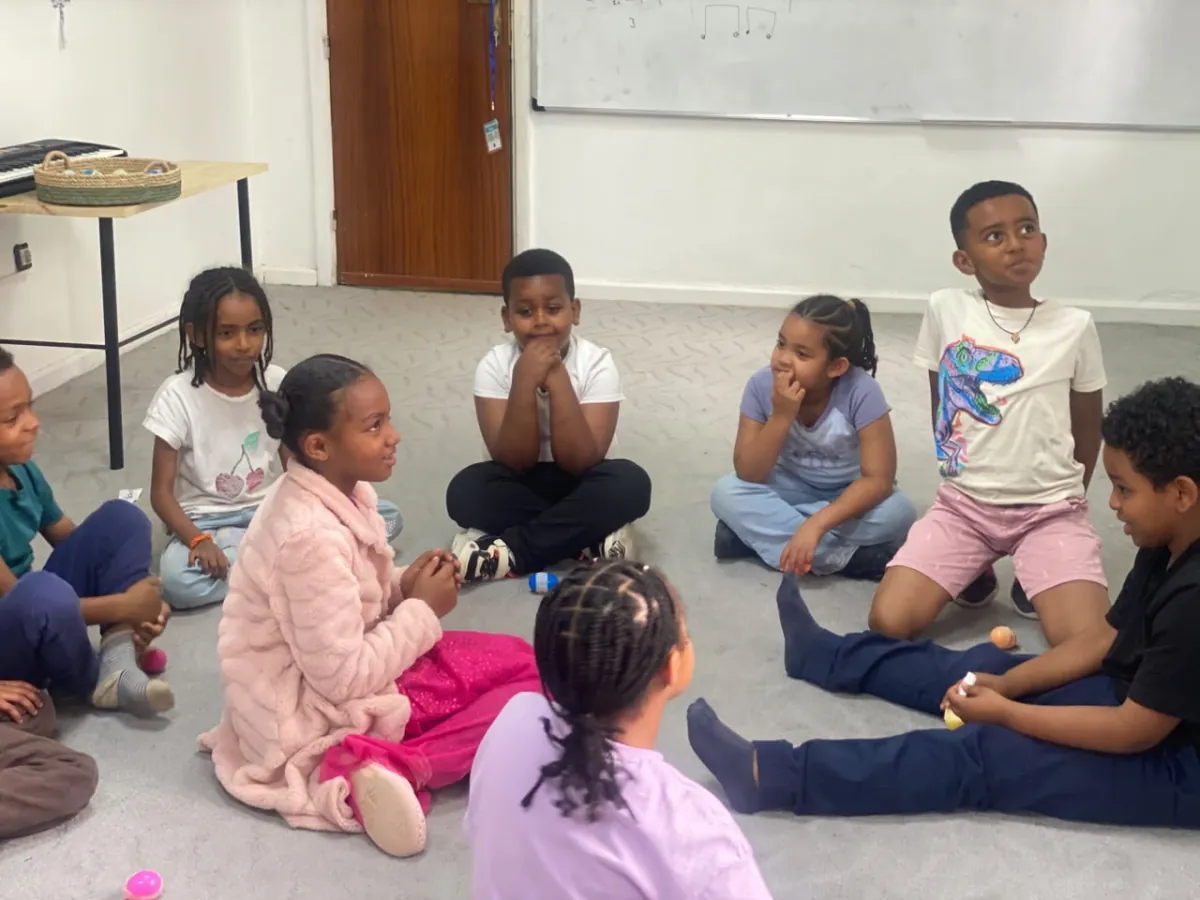
Ask ten parents in Addis Ababa which kindergarten is the best and you will get ten names. Most of them will be describing the building, the uniform or the fees. Very few will describe what happens inside a classroom at ten in the morning, which is the only thing that matters to a four-year-old.
This guide is the opposite of a ranking. It gives you twelve things to check, what good looks like for each one, and the exact questions to ask, so you can judge any kindergarten in the city yourself in a single visit.
Why the kindergarten years matter more than they look
It is tempting to treat kindergarten as a warm-up before "real" school starts in Grade 1. The science says the opposite. The Harvard Center on the Developing Child reports that more than one million new neural connections form every second in the first few years of life, and that the brain is built through what researchers call serve and return: a child makes a sound, a gesture or a face, and an adult responds.
That has a very practical meaning for a school visit. A good kindergarten is one where adults talk with children all day long, not at them. You can see it from the doorway: teachers at child height, asking questions, waiting for answers.
It also matters in Ethiopia specifically. Pre-primary education has grown fast: the World Bank records national O-Class coverage rising from 5.3% to 44% between 2011/12 and 2021/22. Quality has not always kept pace. Research from Addis Ababa University on kindergartens in the city found limited classroom materials and outdoor space, and teachers without training specific to young children. More places means more choice, and more reason to look closely.
The 12 things to check
1. How many children for each adult, in the actual room
Ask for the number in your child’s class, not a school-wide average. The US National Association for the Education of Young Children (NAEYC), whose accreditation standards are widely used as a benchmark, recommends roughly one adult for every 9 or 10 children aged three to five, in groups of no more than 18 to 20 (summary of the NAEYC guidance). Fewer is better. Above that, the serve and return described above simply cannot happen for every child.
2. Training in early childhood, not just a teaching degree
Teaching three-year-olds is a specialism. Ask what early years training the class teacher has, and what training staff received this year. A school that invests in its teachers will answer immediately and with specifics.
3. Play that is planned, not play instead of learning
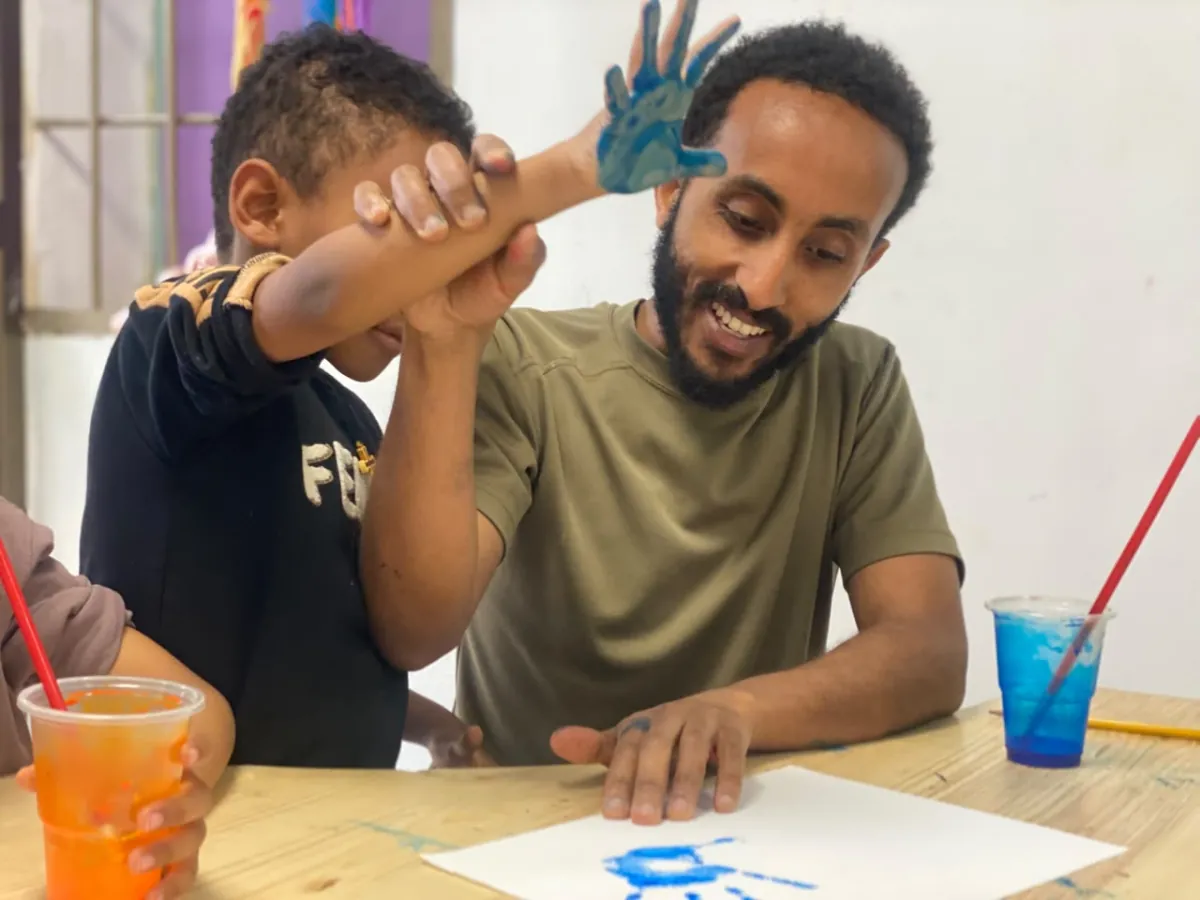
The American Academy of Pediatrics calls play "brain building" and goes as far as urging doctors to write a prescription for it. But good play-based learning is not children left alone with toys. Ask what a block-building or sand session is meant to teach. A good teacher will tell you: counting, comparing, turn-taking, new words.
4. Worksheets for three-year-olds are a warning sign
Many parents in Addis judge a kindergarten by how early children write and how much homework comes home. Rows of copying exercises look like progress. For three- and four-year-olds they mostly teach sitting still. Early reading and writing should grow out of talk, stories, songs and sounds, with pencil work arriving as hands become ready.
5. How reading actually starts
Ask how children learn letters. Most strong international programmes teach phonics: the sound each letter makes, then blending sounds into words. Chanting the alphabet song is not the same thing. If English is not your child’s home language, ask how the school supports that too.
6. Language: English, Amharic and the home language
Children can learn two or three languages at this age, and Addis is full of children who do. What matters is that the school has a clear plan. Ask which language is used for instruction, whether Amharic is taught, and how a child who arrives speaking neither is helped through the first weeks.
7. Outdoor space and how long children use it
The World Health Organization recommends that children aged three and four get at least 180 minutes of physical activity spread through the day. Ask to see the outdoor area and ask how much time each class spends there. A small courtyard used well beats a large field nobody goes out to.
8. Screens
The same WHO guidance says children aged two to four should have no more than one hour of screen time a day, and less is better. A tablet room is not an advantage at this age. Ask whether screens are used, for what, and for how long.
9. Safety and who can collect your child
Ask who is allowed to collect your child and how staff check. Ask whether all staff, including drivers, guards and cleaners, have had background checks. Ask who is trained in first aid, what happens if a child is hurt, and whether any adult is ever alone with a child out of sight. These questions are normal. A good school will be glad you asked them.
10. Food, hygiene and rest
Ask what children eat, who cooks it and how allergies are handled. Look at the toilets and hand-washing stations, which tell you a great deal about a school. For younger children, ask where and when they rest.
11. How the school talks to you
Ask how you will hear about your child’s day and progress: a daily note, a weekly message, a report each term, a meeting with the teacher. Ask who you call if something worries you. Silence until the end of term is not good enough at this age.
12. What happens after KG
This is the question parents most often forget. A child who moves to a new school with a different curriculum at Grade 1 starts again with new teachers, new methods and new friends. If the kindergarten leads straight into a primary school on the same curriculum, the move to Grade 1 is a step rather than a jump.
What to watch for on the visit itself
Visit on a normal school morning, not an open day. Then spend ten minutes simply watching one classroom.
- Children’s own work on the walls, at their eye level, not shop-bought posters.
- A busy hum of talk, not silence and not shouting.
- Teachers kneeling or sitting with children, asking questions.
- How a crying or upset child is handled, and how quickly.
- Children moving between activities on their own, which shows they know the routine.
- Clean toilets, safe gates and staff who notice a stranger walking in.
Questions parents ask about kindergartens in Addis Ababa
What age do children start kindergarten in Addis Ababa? Most private and international kindergartens in Addis Ababa take children from about age three, with two or three kindergarten years before Grade 1. At Nucleus, KG1 is for children aged three to four and KG2 for children aged four to five, followed by Year 1 (Grade 1) at five to six.
What is a good teacher to child ratio for kindergarten? NAEYC guidance is about one adult for every 9 or 10 children aged three to five, in groups of no more than 18 to 20. Ask for the ratio in your child’s actual classroom, not the school average, and count the adults when you visit.
Is play-based or academic kindergarten better? Planned play is better for young children. The American Academy of Pediatrics describes play as brain building, and children learn early maths, language and self-control through well-designed play. The best kindergartens combine play with clear goals, rather than replacing learning with free time or replacing play with worksheets.
How much screen time is okay in kindergarten? The World Health Organization recommends no more than one hour of screen time a day for children aged two to four, and less is better. A kindergarten does not need tablets to be modern; time outdoors, books and conversation matter far more at this age.
Should my child learn in English or Amharic at kindergarten? Young children can learn both well when the school has a clear plan for each language. Many families in Addis choose an English-medium kindergarten that also teaches Amharic, so children are ready for an international primary school without losing the language of home.
Where this happens at Nucleus
Nucleus opened its preschool at the Abo Mekanisa Campus, 100 metres from Mekanisa Abo Square, in 2022. It teaches the early years foundation stage, focused on language, numeracy, social skills and play-based learning, and leads straight into the international Cambridge curriculum through Grade 8 at our Vatican campus.
Our school-wide student to teacher ratio is 9:1. Preschool children also spend time in the agriculture lab, the music room and the STEM lab, because learning goes beyond books from the very first year.
The best way to judge us is the way this guide suggests: come on a normal morning and watch. Call +2519 81 99 99 22 to arrange a visit, or register for Preschool or KG.