academics
Hands-On Learning: What It Is, Why It Works and What It Looks Like in School
Hands-on learning means children learn by doing, then thinking about what they did. Here is what it really is, the evidence behind it (and the popular statistic that is a myth), examples by age, and how to tell real hands-on learning from busy work.
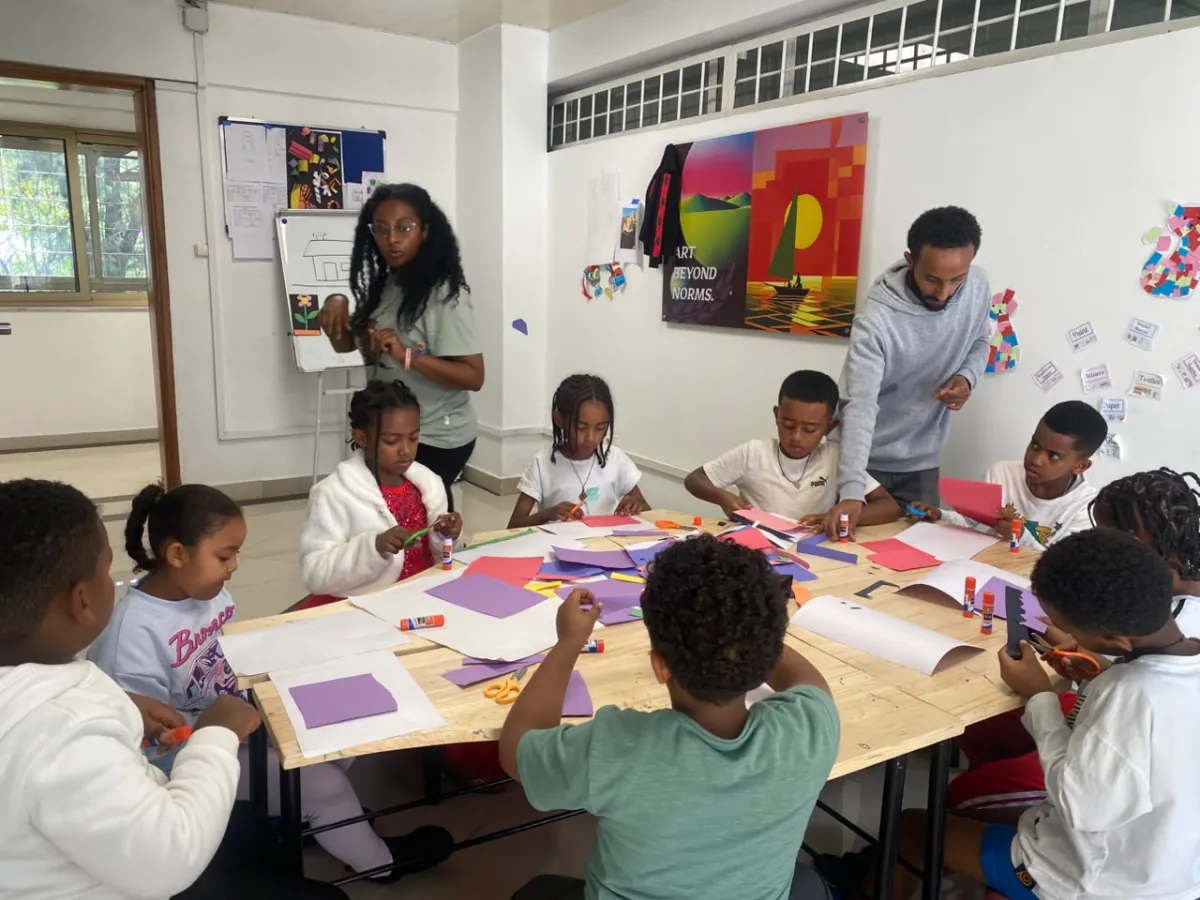
Hands-on learning is one of the most used phrases in education and one of the least explained. It does not just mean children touching things. A class can be full of glue, paint and cardboard and learn very little. A class can be quiet and still be deeply hands-on.
Here is what hands-on learning really means, what the evidence says about it, and what it should look like at each age.
What hands-on learning actually means
Hands-on learning means children learn by doing something real, then thinking about what happened. The doing is only half of it. The thinking afterwards is what turns an activity into learning.
The best-known model is David Kolb’s experiential learning cycle, which builds on the work of John Dewey, Kurt Lewin and Jean Piaget. It has four stages: a concrete experience, reflective observation on what happened, abstract conceptualisation (working out the general idea), and active experimentation, trying the idea out in a new situation (Kolb, The Process of Experiential Learning).
In a classroom that might mean: children plant beans in different spots (experience), notice the ones in the cupboard are pale and thin (observation), conclude that plants need light (concept), then predict what will happen to a plant under a box and test it (experimentation).
What the evidence says
The research supports active, hands-on approaches strongly, with some honest limits.
- In a large analysis in the Proceedings of the National Academy of Sciences, university science students in active learning classes scored about 6% higher on exams, and failure rates dropped from 33.8% to 21.8% compared with lectures (Freeman and colleagues, 2014). The study was of undergraduates, not children.
- The Education Endowment Foundation’s Teaching and Learning Toolkit, as reproduced by its Australian partner, rates metacognition, teaching children to plan, monitor and reflect on their own learning, at about seven months of additional progress (Evidence for Learning). That is the reflection half of hands-on learning.
- The same toolkit rates oral language approaches at about six months, and around seven in the early years (Evidence for Learning). Talking through what you did is part of doing it.
- Research with the Exploratorium in San Francisco on making and tinkering found learning across five dimensions, from problem solving and conceptual understanding to creativity and social engagement, but stressed that results depend on careful design of the activity (NSTA).
The famous statistic that is a myth
You may have seen a pyramid claiming people remember 10% of what they read, 20% of what they hear and 90% of what they do or teach. It appears in school brochures all over the world. It is not real research.
Edgar Dale’s 1946 "cone of experience", which the pyramid is usually credited to, contained no percentages. The numbers were added later, and learning researcher Will Thalheimer calls them bogus (People Matters). Hands-on learning does not need invented numbers. The real evidence above is strong enough. Be wary of any school that relies on the pyramid.
Hands-on learning examples by age
Early years (ages 3 to 5)
- Sorting buttons, leaves or blocks by colour, size and shape.
- Water and sand play with cups and jugs: full, empty, more, less.
- Planting seeds and watering them daily.
- Role play shops with real coins.
Primary (ages 5 to 11)
- Measuring the playground to learn about length and area.
- Building a bridge from paper and testing how much weight it holds.
- Running a fair test: which paper towel absorbs the most water?
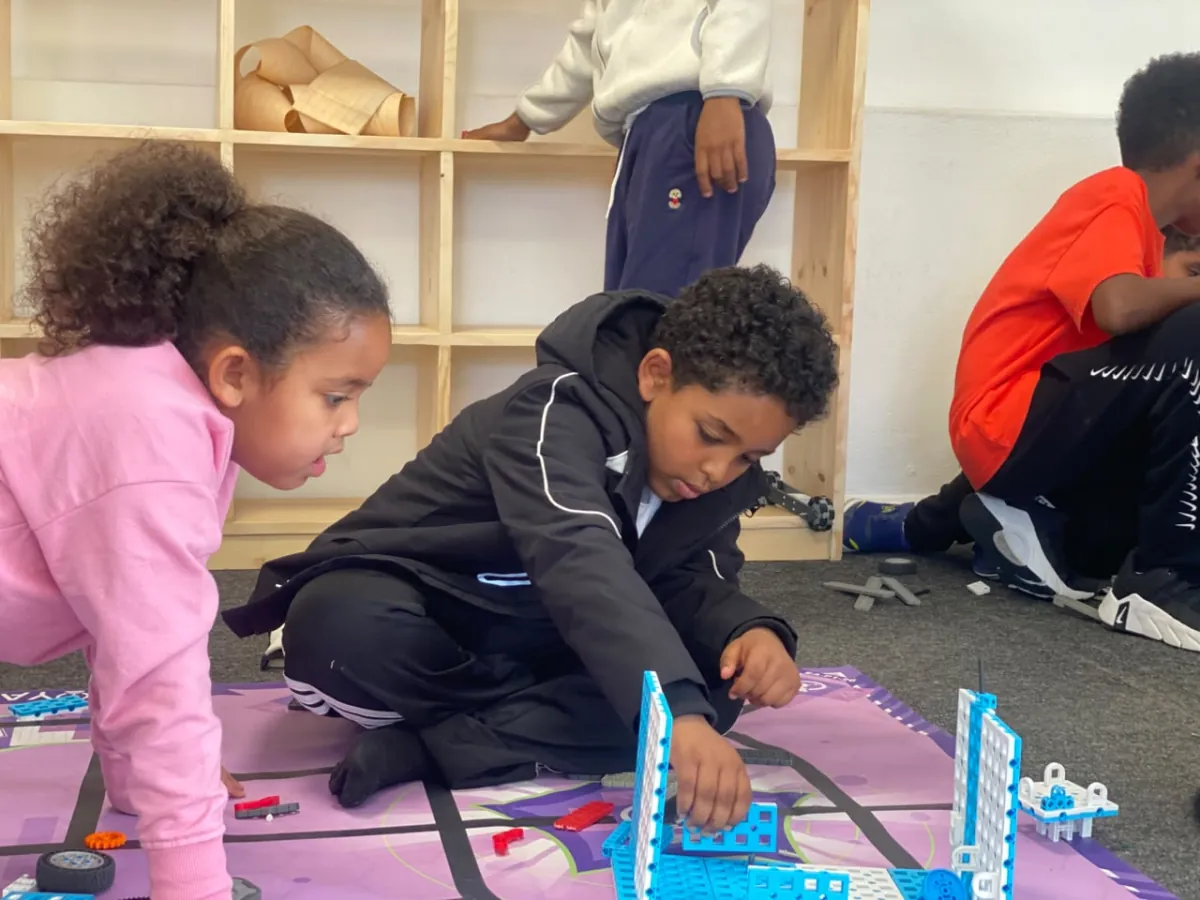
- Programming a floor robot to follow a route.
- Growing vegetables and recording growth on a graph.
Lower secondary (ages 11 to 14)
- Designing and running an independent science investigation.
- Building and programming a robot to solve a set challenge.
- Surveying the class, analysing the data and presenting the findings.
- Making a product, pricing it and selling it, which brings maths, design and enterprise together.
Real hands-on learning or busy work?
Not every activity is learning. Use these questions to tell them apart:
- Can the child say what they were trying to find out or make, and why?
- Was there a real problem to solve, or just instructions to follow?
- Did anything go wrong, and did the child have to fix it?
- Did the teacher ask questions afterwards, so the child had to explain what happened?
- Does it connect to what the class is learning in maths, science or language?
A pretty craft that every child completes identically from a template is busy work. A wobbly model that a child redesigned twice and can explain is learning.
Hands-on learning at home
- Cook together: measuring, timing and following a sequence.
- Fix things together and let your child hold the tools.
- Turn questions into small experiments: "Which ice cube melts faster, in the sun or the shade?"
- After any activity, ask "what happened, and why do you think it happened?"
Questions parents ask about hands-on learning
What is hands-on learning? Hands-on learning is an approach in which children learn by doing a real activity, such as building, experimenting, measuring or making, and then reflecting on what happened. It is based on experiential learning theory, which describes a cycle of concrete experience, reflection, forming ideas and testing them in new situations.
What are the benefits of hands-on learning? Research on active learning shows higher exam scores and lower failure rates than lecture-based teaching, and approaches that build reflection and talk are linked to several months of additional progress. Hands-on learning also builds problem solving, persistence, teamwork and confidence.
Is it true we remember 90% of what we do? No. The learning pyramid percentages are a myth. Edgar Dale’s original 1946 cone of experience had no percentages, and the numbers were added later without research behind them. The real evidence for active learning comes from studies such as Freeman and colleagues’ 2014 analysis.
What are examples of hands-on learning? Examples include planting and measuring seeds, building and testing paper bridges, running fair-test science experiments, programming floor robots, measuring the playground for maths, and making and selling a product.
Is hands-on learning only for young children? No. It suits every age. Young children learn through sorting, building and play; primary students through experiments and projects; older students through independent investigations, design challenges and enterprise projects.
Where this happens at Nucleus
Our motto, ትምህርት ከደብተር ያልፋል (learning goes beyond books), is a daily promise. At Nucleus, hands-on learning runs through STEM labs and the Artificial Intelligence Lab, agriculture labs where students grow plants, study soil and learn about food systems, art and crafts, the music band, and a workshop where students learn woodwork and pottery. Items they make are sold at our school stall, a first real taste of enterprise.
See it for yourself. Call +2519 81 99 99 22, explore agriculture and animal care at Nucleus, or register your child.