academics
What Will My Child Learn in Year 1? A Cambridge Primary Stage 1 Guide
Year 1 is the first year of Cambridge Primary. Here is what children actually learn in English, maths and science at Stage 1, with real examples from the Cambridge curriculum, what a good Year 1 classroom looks like, and how to help at home.
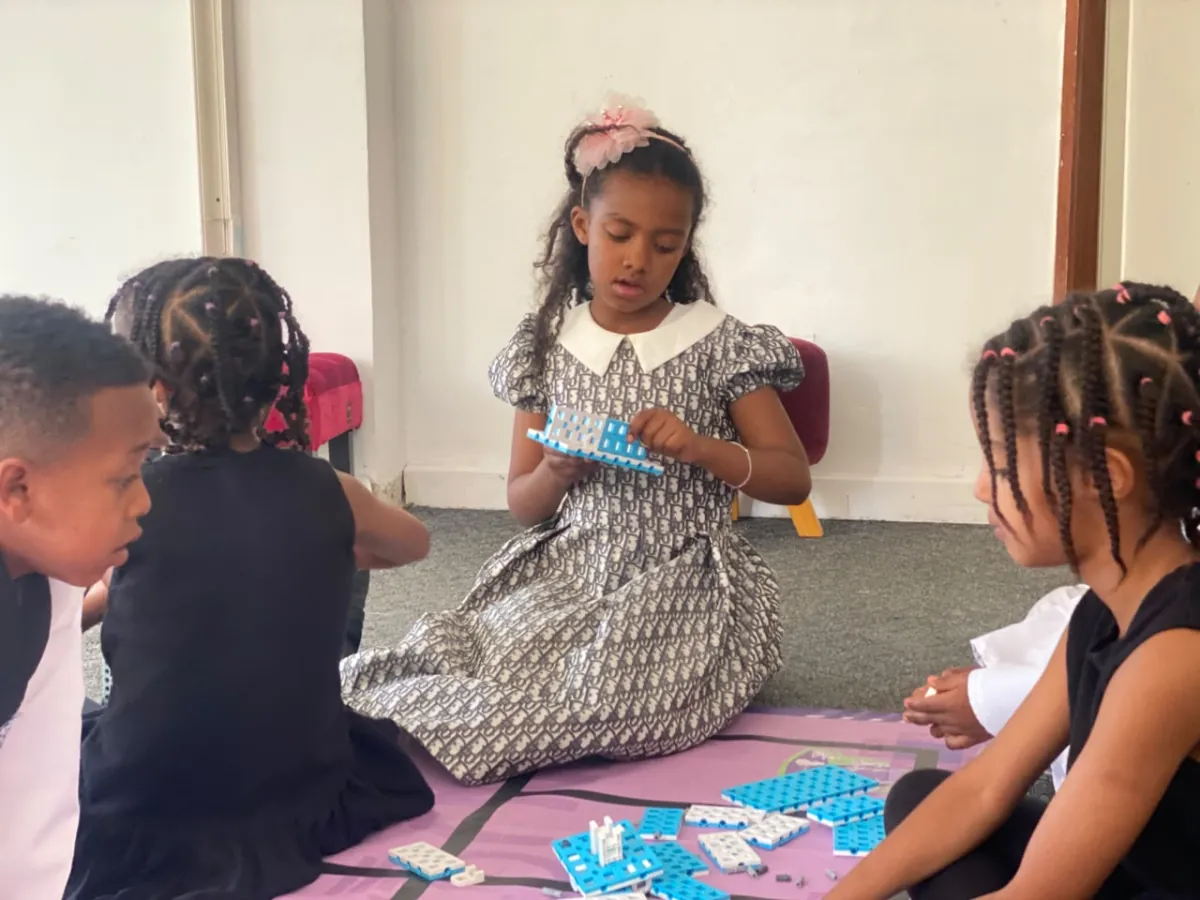
Year 1 is the year school starts to feel like school. Your child moves from the play-based foundation stage into the first year of Cambridge Primary, called Stage 1, usually at age five to six. Lessons become a little longer, reading and writing take off, and children begin to be taught subjects by name.
Here is what that year actually contains, with real examples from the Cambridge curriculum, and what separates an excellent Year 1 class from an ordinary one.
How Year 1 fits into Cambridge Primary
Cambridge Primary runs for six stages, typically from age 5 to 11 (Cambridge Primary). Each subject has a curriculum framework with learning objectives for every stage, so Year 1 is not a loose introduction: it has specific targets, and Year 2 builds directly on them.
There are no formal Cambridge tests in Year 1. Cambridge’s Progression Tests start at Stage 3. Teachers track progress through classwork, observation and their own checks, so the reports you receive should describe what your child can do, not just a score.
English in Year 1
Cambridge Primary English covers reading, writing, and speaking and listening, and aims for children to "see themselves as readers" and writers (Cambridge Primary English). In Year 1 that usually looks like:
- Phonics every day: learning the sounds letters and letter groups make, then blending them to read words and splitting words to spell them.
- Reading simple books independently, and talking about stories read aloud: who, what happened, what might happen next.
- Writing short sentences with capital letters and full stops, using sounds to spell new words.
- Forming letters correctly, which Cambridge now supports with its own phonics and handwriting scheme.
- Speaking in front of the class, listening to others and following instructions with several steps.
Expect invented spellings like "becos" in Year 1. That is phonics working, not a mistake to panic about.
Maths in Year 1
Cambridge Primary maths is organised into number, geometry and measure, and statistics and probability, plus a thread called Thinking and Working Mathematically (Cambridge Primary mathematics). Cambridge’s published Stage 1 curriculum outline gives a feel for the number work. Examples of Stage 1 objectives include:
- Recite numbers forwards from 1 to 100 and backwards from 20 to 0.
- Read and write numerals from 0 to 20, and count objects up to 20.
- Count on in tens to 100, and in twos, beginning to see odd and even numbers.
- Say the number that is 1 or 10 more or less than any number up to 30.
- Use the = sign to show that two amounts are equal.
- Double any single-digit number, and halve even numbers of objects up to 10.
Alongside number, children name and sort 2D and 3D shapes, compare lengths and weights, begin to tell the time and collect simple data, such as a class tally of favourite fruit. The framework has been revised since that outline was published, so a school’s exact wording may differ, but the level is a good guide.

Science in Year 1
Cambridge Primary science has six strands: biology, chemistry, physics, earth and space, thinking and working scientifically, and science in context (Cambridge Primary science). Examples from Cambridge’s Stage 1 outline include knowing that plants are living things that need light and water to grow, naming the major parts of a plant, exploring how seeds grow, naming the main external parts of the body, and exploring how our senses tell us about the world.
Just as important, Year 1 children start to work like scientists: predicting what will happen, looking closely, measuring in simple ways and saying what they found. A Year 1 class that plants beans and checks them every morning is learning more science than one copying labelled diagrams.
Beyond the core subjects
Cambridge Primary offers 13 subjects in total, and most schools teach several beyond English, maths and science in Year 1, such as art and design, music, physical education, Global Perspectives, digital literacy or computing, and wellbeing. Ask which ones your school teaches and how often. See the full list in our guide to Cambridge Primary subjects.
What the best Year 1 classes have in common
Every Year 1 class follows a curriculum. The best ones do five things differently:
- Small classes, so the teacher hears every child read several times a week.
- A bridge from the foundation stage: plenty of hands-on, active learning in the first term, not a sudden switch to desks and worksheets.
- Daily, systematic phonics rather than occasional reading practice.
- Real materials in maths and science: counters, scales, seeds, magnets.
- Teachers who tell you specifically what your child can do now and what comes next.
When you visit, ask to see a set of Year 1 writing books from the start and end of last year. The difference between September and June tells you more about a school than its brochure.
How to help your child in Year 1
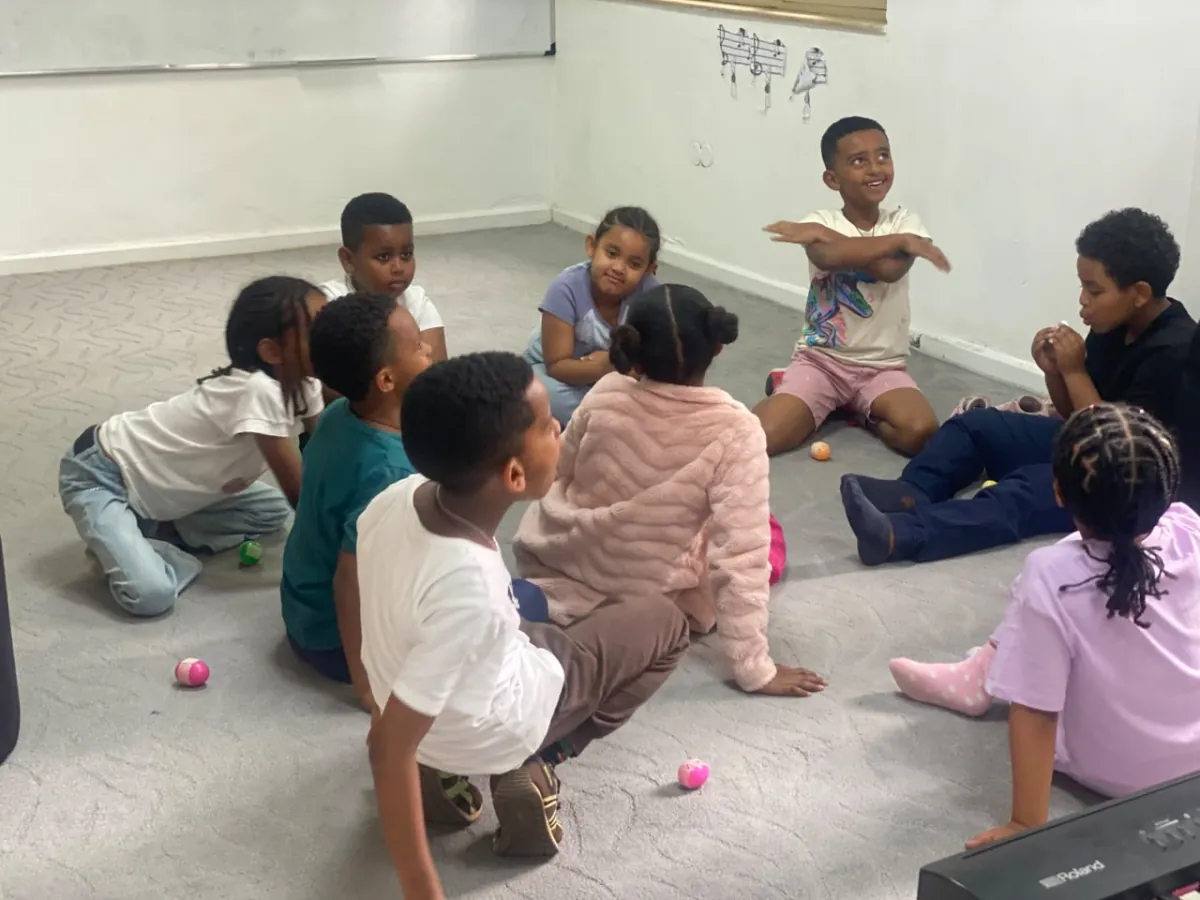
- Read together for ten to fifteen minutes every day, and ask your child to read a few words or pages to you.
- Ask the teacher which phonics sounds the class is learning, and spot them on signs and packets.
- Play number games: count forwards and backwards in the car, double numbers, share snacks fairly.
- Ask "how do you know?" when your child tells you something. It builds the reasoning Cambridge assesses.
- Keep bedtime regular. Tired children cannot learn to read.
Questions parents ask about Year 1
What age is Year 1? Year 1 is usually for children aged five to six. In Cambridge Primary it is Stage 1, the first of six primary stages. At Nucleus, Year 1 is also called Grade 1, and entry is assessed individually.
What do children learn in Year 1 maths? In Cambridge Primary Stage 1, children count to 100, read and write numbers to 20, count in twos and tens, find one more and one less, start doubling and halving, use the equals sign, and work with shapes, measures, time and simple data.
Should my child be reading by the end of Year 1? Most children can read simple books independently by the end of Year 1, using phonics to sound out new words. Children develop at different speeds, so ask the teacher how your child is progressing against the year’s objectives rather than comparing with other children.
Are there exams in Year 1? No. Cambridge Progression Tests begin at Stage 3, and Cambridge Primary Checkpoint is at the end of Stage 6. In Year 1, teachers assess through classwork and observation.
What makes a good Year 1 class? Small class sizes, daily systematic phonics, hands-on maths and science with real materials, a gentle bridge from play-based learning, and teachers who tell parents specifically what their child can do and what comes next.
Where this happens at Nucleus
Year 1 (Grade 1) at Nucleus is taught at our Sarbet Vatican campus, for children aged five to six, on the international Cambridge curriculum. Our school-wide student to teacher ratio is 9:1, and our learning support team works with teachers and families on extra help or extra challenge where a child needs it.
Come and see a Year 1 class on a normal morning. Call +2519 81 99 99 22, or register for Grade 1 to 8.