academics
The Cambridge Early Years Curriculum: What Children Learn from Age 3 to 6
Cambridge Early Years is the play-based start of the Cambridge pathway for 3 to 6 year olds. Here are its six learning areas, how play turns into real learning, how progress is tracked without tests, and how to support it at home.
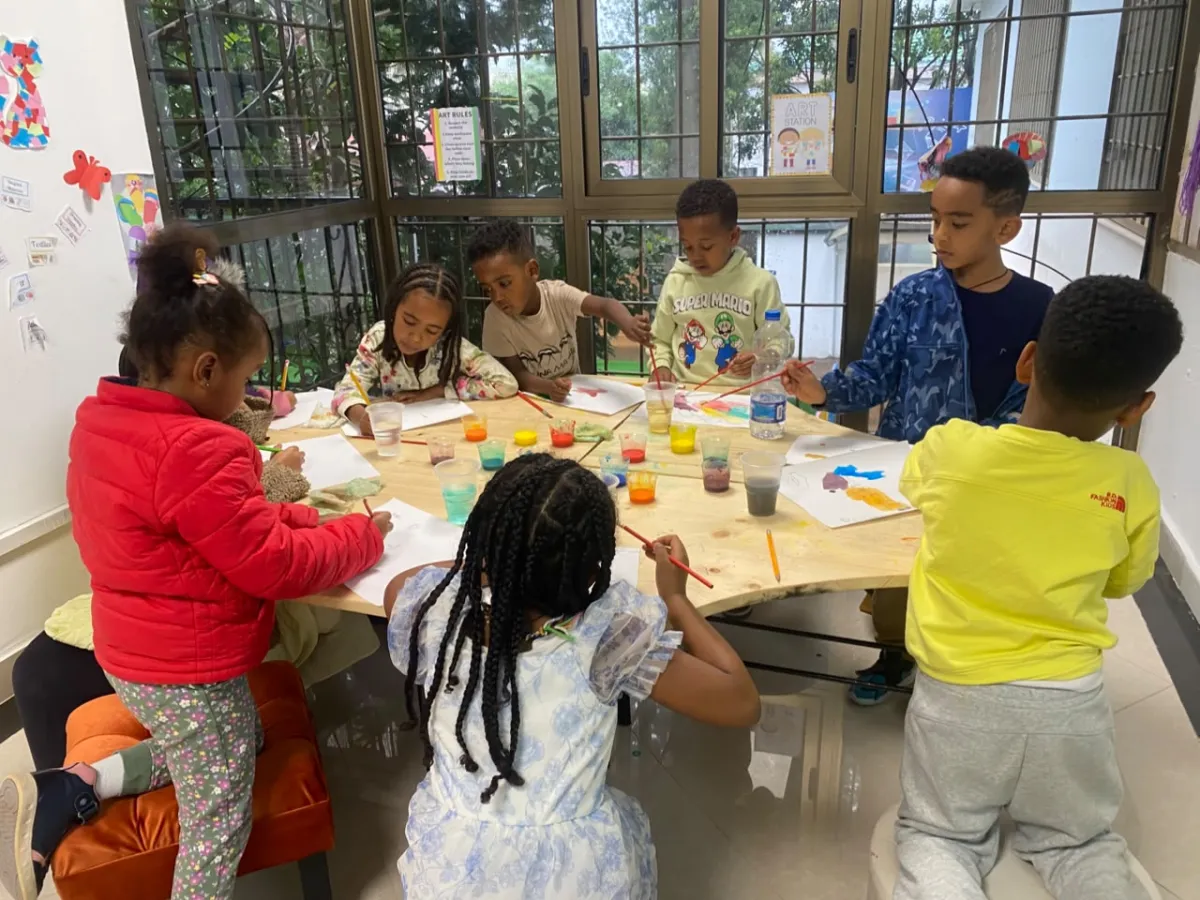
Parents visiting an early years classroom often leave with one worried question: they were playing, but when do they actually learn? In a good foundation stage, the play is the learning, and every part of it is planned.
Cambridge Early Years is the first stage of the Cambridge pathway, written for children aged 3 to 6. Here is what it contains, what a day built on it looks like, and how to tell whether a school is doing it well.
What Cambridge Early Years is
Cambridge describes Early Years as "a child-centred, play-based programme that helps young learners to develop at their own pace" (Cambridge Early Years). It is the first step of a pathway that runs to age 19, and it is designed to prepare children for the move to more formal teaching in primary school.
The curriculum is built around four areas of early childhood development: physical, cognitive, language and communication, and social and emotional. It uses a spiral approach, returning to the same topics and skills in more depth each year (Cambridge Early Years curriculum).
It was also written with multilingual children in mind, supporting learners whose home language is not English. That matters in Addis Ababa, where many children arrive speaking Amharic, Afaan Oromo, French or another language at home.
The six learning areas
Cambridge splits the content into six areas, but stresses they are "all connected and taught together as children play" (parent guide).
Communication, language and literacy
Talking, listening, stories, songs and rhymes, then the sounds letters make and the first steps of reading and writing. Cambridge has added a phonics and handwriting scheme to support this stage.
Mathematics
Counting real things, comparing bigger and smaller, sorting by colour and shape, spotting patterns, using words like more, fewer, before and after. Most early maths happens with blocks, sand, water and snacks, not worksheets.
Understanding the world
Plants, animals, weather, materials, the local community, simple technology. Cambridge notes this area lays foundations for science, digital literacy, computing and humanities later on.
Personal, social and emotional development
Making friends, taking turns, naming feelings, managing frustration, becoming independent with coats, shoes and lunch. For many parents this turns out to be the most important area of all.
Physical development
Running, climbing, balancing and throwing, and the fine motor control in fingers and hands that later makes holding a pencil comfortable. The World Health Organization recommends at least 180 minutes of physical activity a day for children aged three and four.
Creative expression
Painting, building, music, movement, role play and making things up. Creativity at this age is how children test ideas about the world.
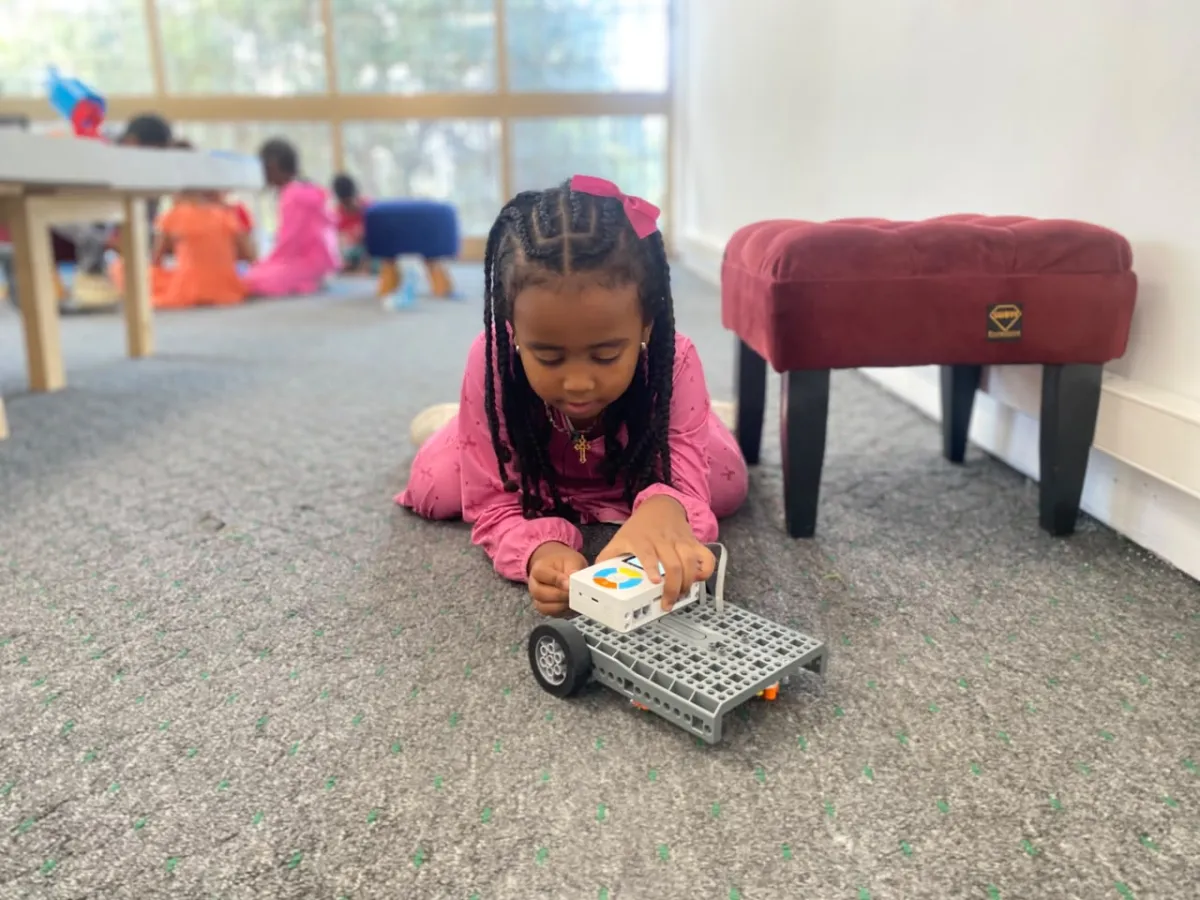
How play becomes learning
Planned play is different from free time. The teacher sets up the environment with a purpose, joins in, asks questions and adds new words at the right moment. Take a water tray:
- Pouring between cups of different sizes is early measurement: full, empty, half, more, less.
- Guessing which objects float is a first scientific prediction.
- Sharing the jug with three other children is turn-taking and negotiation.
- Describing what happened to the teacher is speaking, listening and new vocabulary.
The American Academy of Pediatrics describes play as "brain building" and says real-time social play is better for young children’s learning than digital media. The research is clear on this point.
How progress is tracked without tests
There are no exams in Cambridge Early Years. Assessment is "continuous formative assessment, including observations of children in the learning environment and evidence gathered during learning" (Cambridge). Teachers watch, note, photograph and keep samples of work, then judge progress against the learning statements in the framework.
As a parent, ask what records the school keeps and how often you will see them. A good early years teacher can show you a dated picture, a quote from your child or a note on how they solved a problem, not just a mark.
Getting ready for Year 1
The last year of Early Years gradually adds structure: slightly longer focused sessions, more letter and number work, more independence. Cambridge describes this as helping children "move from play-based learning to more formal teaching" in primary school.
Ready for Year 1 does not mean reading fluently. It means being able to listen in a group, look after their own things, hold a pencil comfortably, know many letter sounds, count reliably and ask for help. Our guide to what children learn in Year 1 shows what comes next.
How to support early years learning at home
- Talk constantly, in whichever language you speak best at home. A rich home language helps English, not the opposite.
- Read aloud every day, and let your child turn the pages and tell you what happens next.
- Count real things together: stairs, injera, cars on the road.
- Give small jobs: setting the table, sorting socks, watering a plant.
- Keep screens short. The WHO recommends no more than one hour a day for children aged two to four.
- Let them try before you help. Frustration in small doses builds persistence.
Questions parents ask about the Cambridge Early Years curriculum
What is the Cambridge Early Years curriculum? It is the first stage of the Cambridge pathway, a play-based programme for children aged 3 to 6. It covers six connected learning areas: communication, language and literacy; mathematics; understanding the world; personal, social and emotional development; physical development; and creative expression.
Is Cambridge Early Years play-based? Yes. Cambridge describes it as a child-centred, play-based programme. The play is planned by teachers to build specific skills, so children learn early maths, language and social skills through activities designed for that purpose.
Are there tests in Cambridge Early Years? No. Progress is tracked through continuous observation and samples of children’s work, judged against the learning statements in the Cambridge Early Years framework.
What should my child know before starting Year 1? Most children are ready for Year 1 when they can listen in a group, manage their own belongings, hold a pencil comfortably, recognise many letter sounds, count objects reliably and ask an adult for help. Fluent reading is not expected.
What is the difference between Early Years and kindergarten? Kindergarten (KG) is the name of the classes; Early Years is the curriculum stage those classes follow. In a Cambridge school, children in nursery and KG classes are taught the early years curriculum before moving into Cambridge Primary.
Where this happens at Nucleus
At Nucleus, the early years foundation stage runs at our Abo Mekanisa Campus for KG1 (ages three to four) and KG2 (ages four to five). It focuses on language, numeracy, social skills and play-based learning, with time in the agriculture lab, the music room and the STEM lab, and leads straight into Cambridge Primary at our Vatican campus.
Choosing a kindergarten? Our checklist of 12 things to check works for any school, including ours. To visit, call +2519 81 99 99 22 or register for Preschool and KG.