academics
Cambridge Lower Secondary Explained: Years 7 to 9 and the Road to IGCSE
Cambridge Lower Secondary covers Years 7 to 9, ages 11 to 14: the three years that decide how ready a child is for IGCSE. Here are the subjects, what changes from primary, how the Lower Secondary Checkpoint works and what to ask a school.
Ask a secondary teacher when IGCSE results are really decided and many will say: in Years 7 to 9. Those three years are where children either build the study habits, reading stamina and confidence in maths that IGCSE demands, or fall quietly behind.
Cambridge Lower Secondary is the stage of the Cambridge pathway that covers those years. Here is what it contains, how it differs from primary, and how to judge whether a school is using it well.
What Cambridge Lower Secondary is
Cambridge Lower Secondary is "typically for learners aged 11 to 14 years" and runs across Stages 7, 8 and 9 (Cambridge Lower Secondary). It follows Cambridge Primary and leads into Cambridge IGCSE, which most students begin at about 14.
Like Primary, each subject has a curriculum framework with learning objectives for every stage. The difference is depth: the same strands continue, but students are expected to reason, explain and work independently at a much higher level.
The subjects
Cambridge offers 13 Lower Secondary subjects, mirroring Primary: English, English as a Second Language, Mathematics, Science, Global Perspectives, Computing, Digital Literacy, Humanities, Modern Foreign Language, Art and Design, Music, Physical Education and Wellbeing. Schools choose which to teach.
- Mathematics moves firmly into algebra, equations, geometry with proof-like reasoning, and probability and statistics with real data.
- Science keeps its six strands: biology, chemistry, physics, earth and space, Thinking and Working Scientifically, and Science in Context (Lower Secondary science). Investigations become student-designed rather than teacher-led.
- English shifts toward analysing how writers create effects, and writing extended arguments, reports and stories.
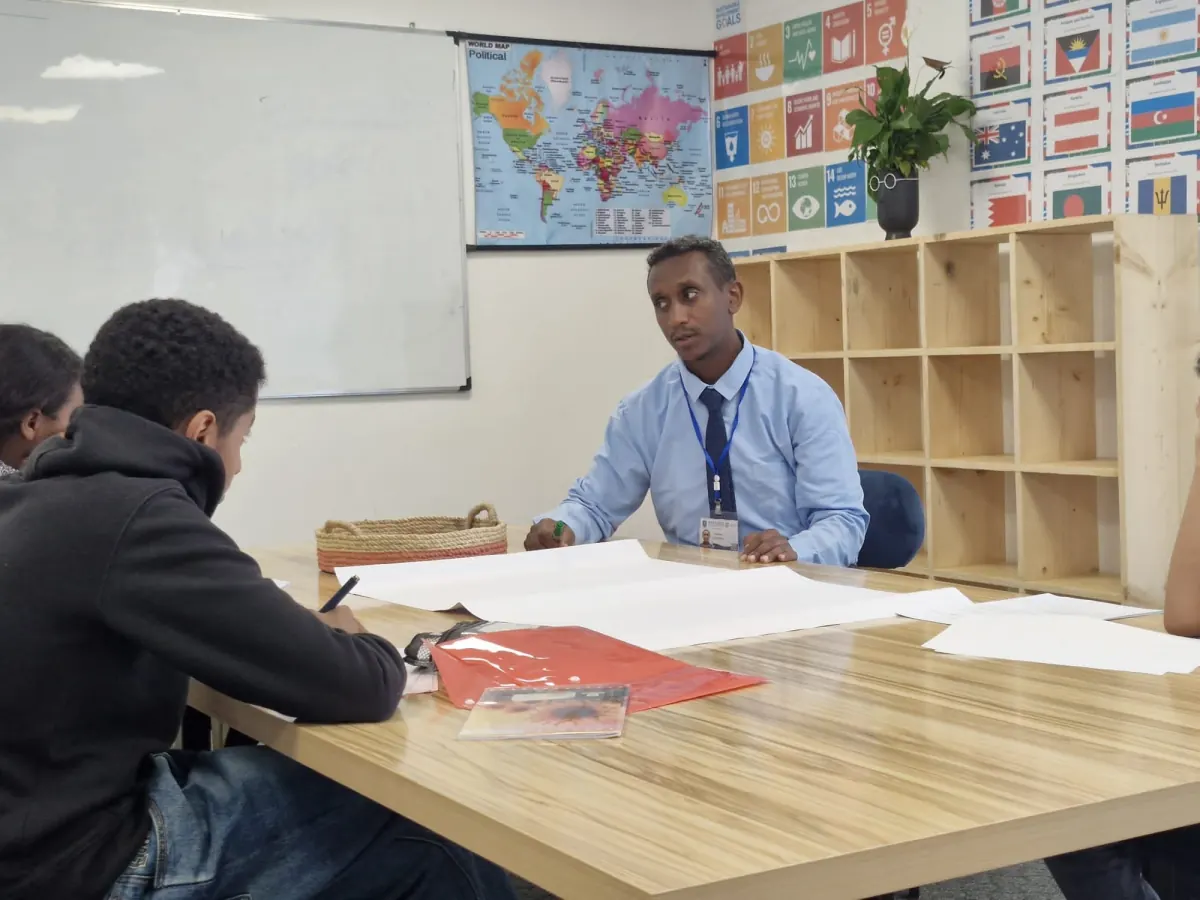
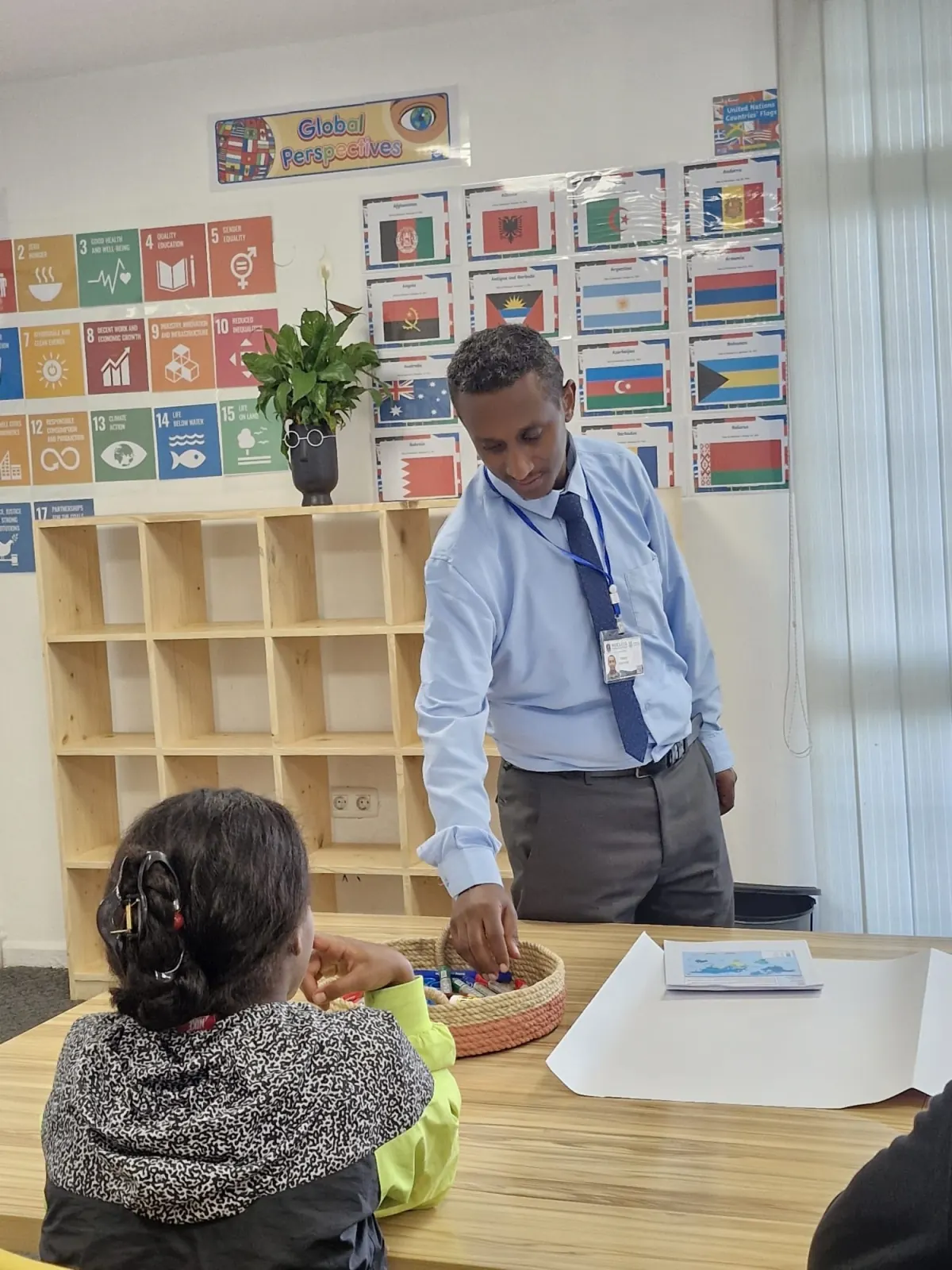
- Global Perspectives asks students to evaluate sources and build arguments from evidence, the exact skills IGCSE and A Level essays reward. Read more in Cambridge Global Perspectives explained.
- Computing moves from blocks to text-based programming. See the Cambridge computing curriculum.
What really changes from primary
The content gets harder, but the bigger change is in what is expected of the student:
- More subject specialist teachers and more movement between lessons.
- Homework that requires planning across several days, not one evening.
- Reading longer texts independently, across every subject.
- Being marked on the quality of reasoning, not just the answer.
- Taking responsibility for organisation: deadlines, equipment, revision.
Children who struggle in Year 7 are rarely struggling with content. They are struggling with organisation and independence. A good school teaches those skills deliberately rather than assuming them.
How the Lower Secondary Checkpoint works
At the end of Stage 9, schools can enter students for Cambridge Lower Secondary Checkpoint: tests in English (first or second language), mathematics and science, with Global Perspectives as an option. The tests are marked externally by Cambridge. Each student receives a statement of achievement, and the school receives diagnostic feedback against an international benchmark (Lower Secondary assessment).
From 2026, test series run in March, May and October (Checkpoint FAQ). Teacher-marked Progression Tests are also available for Stages 7, 8 and 9 in the core subjects.
Checkpoint is recommended rather than required, and it is not a qualification. Its value is timing: it shows, a year or more before IGCSE, exactly which strands in each subject need work.
Getting ready for IGCSE
Cambridge IGCSE is typically taken from 14 to 16, offers more than 70 subjects, and is graded A* to G (IGCSE parent guide). In the UK it is accepted as equivalent to the GCSE. Students usually choose their IGCSE subjects during Year 9, so Lower Secondary is also where interests and strengths become clear.
By the end of Year 9 a student well prepared for IGCSE can:
- Read a demanding text and summarise its argument.
- Write a structured, multi-paragraph answer under time pressure.
- Solve multi-step problems in algebra without being told the method.
- Plan a fair scientific investigation and evaluate its results.
- Revise effectively, which is a skill that has to be taught.
Questions to ask a school about Years 7 to 9
- Which subjects are taught by subject specialists?
- How do you teach study skills and organisation in Year 7?
- Do you use Progression Tests and enter students for Lower Secondary Checkpoint?
- How do students choose their IGCSE subjects, and when?
- Where do your students continue for IGCSE and A Level?
Questions parents ask about Cambridge Lower Secondary
What is Cambridge Lower Secondary? It is the stage of the Cambridge pathway for learners aged about 11 to 14, covering Stages 7 to 9 (Years 7 to 9). It follows Cambridge Primary and prepares students for Cambridge IGCSE, with up to 13 subjects including English, mathematics and science.
What is the Cambridge Lower Secondary Checkpoint? It is an optional set of externally marked tests at the end of Stage 9 in English, mathematics and science, with Global Perspectives available. Students receive a statement of achievement and schools receive diagnostic feedback against an international benchmark. From 2026 it runs in March, May and October.
Is Lower Secondary Checkpoint a qualification? No. It is a diagnostic assessment that shows strengths and gaps before IGCSE. IGCSE, usually taken at about 16, is the first formal Cambridge qualification.
What age is Year 7? Year 7 is usually for students aged 11 to 12, the first year of Cambridge Lower Secondary. In American grade terms it sits alongside Grade 6.
How can I help my child prepare for IGCSE? Encourage daily independent reading, make sure gaps in maths are closed early, help them build a weekly homework routine, and ask the school which strands their Progression Test or Checkpoint results show need attention.
Where this happens at Nucleus
Nucleus teaches Cambridge Lower Secondary through Grade 8 at our Sarbet Vatican campus, with deeper subject focus and growing student independence. In Years 7 to 9 Global Perspectives is taught by a subject teacher, Tilahun G/Kiristose, whose classroom is the subject of our first Inside the Nucleus Classroom issue.
For the 2027/28 academic year our Totot Campus in Gerji opens Grades 9 to 12 with a Cambridge IGCSE and A Level pathway, so students can continue straight on. Call +2519 81 99 99 22, or register for Grade 1 to 8.